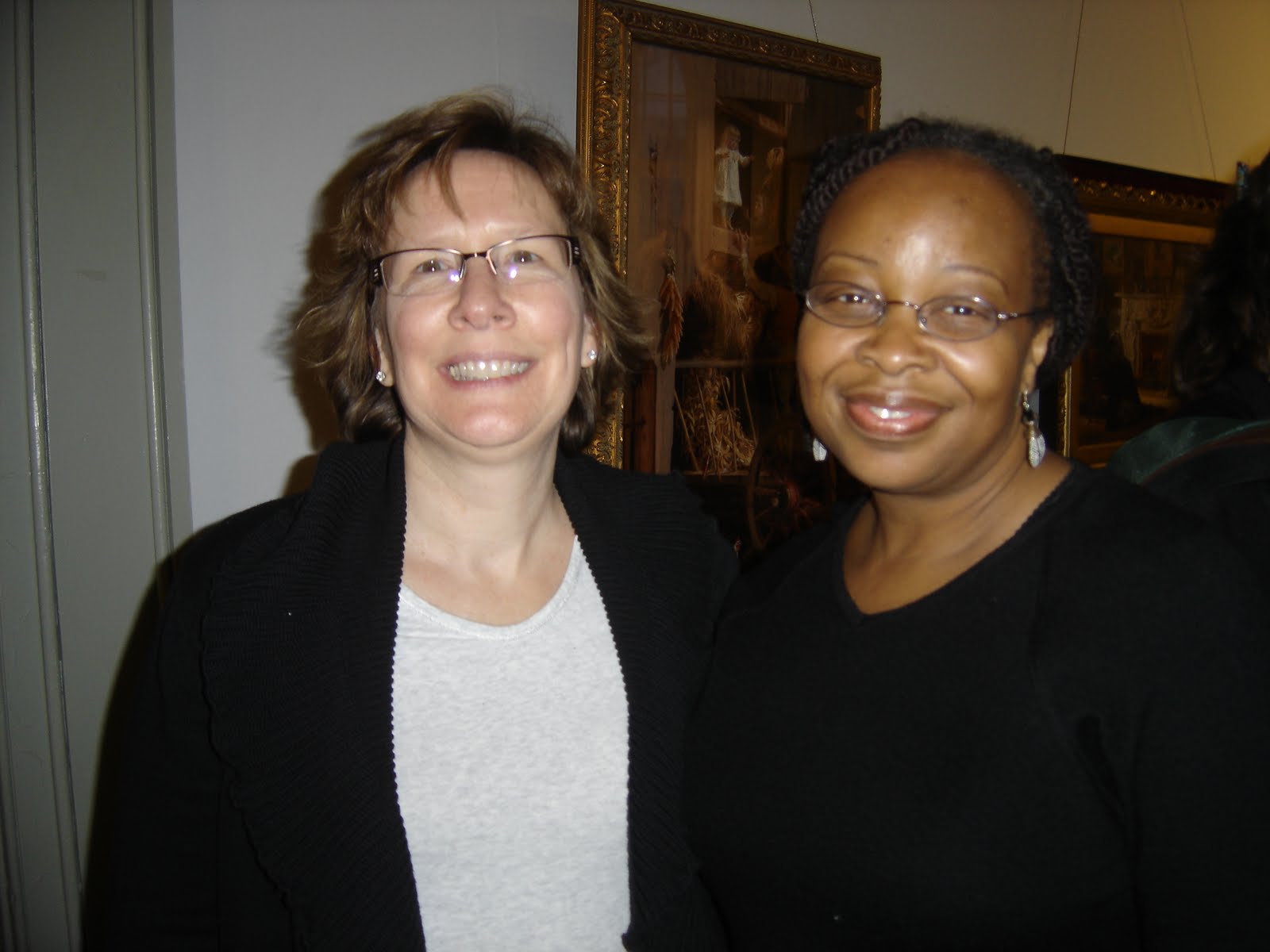
Today is the first day of my fourth and final semester in Vermont College of Fine Arts MFA Program in Writing for Children and Young Adults. If you have read my previous posts on VCFA, you will know that the biannual 10-day Residencies I attend are like entering a different world - Brigadoon, as Tim Wynn-Jones called it my first Residency. Students and faculty spend a week and a half perched atop a hill in Montpelier, Vermont discussing children's books, writing, and all the magic and frustrations that go along with it.
This Residency was bitter-sweet, knowing this is my last semester and my second to last Residency. I am excited, anxious, and a little bit scared at the idea of not having the magic of VCFA to guide me. But those are sentiments for six months from now. I still have to survive this semester with my new advisor, Rita Williams-Garcia.
Rita Williams-Garcia. Let me say it again - Rita Williams-Garcia. If you are not familiar with her, let me just say that recently her publisher has been scrambling to redesign the cover of her book One Crazy Summer so they can fit all the award stickers on it!
Now imagine me, sending my manuscript - which has never been read all the way through by anyone but me - to Rita Williams-Garcia. I'll just say, "Yikes!" But I know Rita's comments - even if she kindly tells me to start over from a blinking cursor - will teach me, inform me, and guide me to become the best writer I can be. And isn't that what all of this is about?
As I drove home yesterday, my head filled with ideas, inspiration, and eagerness, I gradually had to re-enter my Real Life. As I ticked off the states - Vermont, Massachusetts, Connecticut, New York, and New Jersey - as the snow gradually got dirtier, the temperature inched higher, and the traffic got heavier, I left the magic of VCFA/Brigadoon behind. By the time I got to the NY/NJ border, I was thinking about doing laundry, going to the grocery, and the dentist appointment I have next week.
This morning I am back at my computer, not quite ready to surrender to Real Life. I'm trying to recreate the wonder of the last ten days. The laundry still isn't done, I haven't been to the grocery, and I'm thinking of canceling that dentist appointment.
"Never give up! Never surrender!" (Galaxy Quest)
Friday, January 21, 2011
Returning to Life


Thursday, December 23, 2010
Being Critical - In a Good Way

The above photo is of my desk. For some reason it doesn't look as messy in the picture as it does in real life. I have my piles -- VCFA packet pile, top left between lap and computer screen; 2nd wip pile, directly in front surrounded by research books and coffee cup; VCFA Workshop readings, pile to the far left. These are the essentials to my work. And I have been working!
I just completed my third semester at Vermont College of Fine Arts. During this past semester, as a requirement for receiving my MFA in Writing for Children and Young Adults, I had to write a critical thesis on a topic of my choosing relating to the craft of writing for children. To say this was an arduous endeavor would be understatement. But I did it. I struggled through it with the assistance of my fantastic advisor, Shelley Tanaka, and several skype sessions with fellow VCFAers who were in the same critical thesis boat as I.
I truly disliked writing the thesis. But I must admit that I learned a lot. Not only about the topic I chose, which is closely related to my wip, but also about reading and writing critically. So, during this season of giving, my "gift" to fellow writers are my ever evolving thoughts on reading and writing critically.
For anyone who has been following this blog since it's inception knows that I am a reading convert. Going back to May 2008 I confessed that I didn't read children's literature. Now, two and a half years later, all I read is children's literature. My friends who used to ask me for book suggestion are disappointed when I suggest Suzanne Collins's The Underland Chronicles , Jennifer Donnelly's A Northern Light, or Claudette Colvin: Twice Towards Justice by Phillip Hoose. They look at me, roll their eyes and ask, "Aren't you ever going to read real books again?" Let's skip my response to them, because THAT could be a whole other post.
The title of my critical thesis is "The Appeal of the Ultimate Bad Boy: The Personification of Death in Books for Children and Young Adults". I looked at four books -- The Book Thief by Markus Zusak, Keturah and Lord Death by Martine Leavitt, Mort by Terry Pratchett and Keeper of Soles by Teresa Bateman -- that present Death as a main character. I chose this topic because in my current wip, Death shows up at high school to pursue the sister of a girl whose soul he's just gathered. What I wanted to learn was how did Zusak, Leavitt, Pratchett, and Bateman make their Death characters likeable? And why did they do it? What I learned is that there are a variety of devices writers use to make characters, even stereotypically bad characters, likeable and even human. By the end of all these stories the protagonist/reader roots for Death. So, which devices work best? Which can I employ in my own writing? As for the Why? writers present Death as likeable, I'll simply quote Gregory MacGuire when he spoke at VCFA's Summer Residency in July 2010 when he said, "The Why is as personal as prayer."
But beyond the craft of writing, I learned about myself as a writer - How I write. I am an impatient writer. I don't like to plan or outline. I just write. That leads to many, many, many revisions. I'm not saying that writing organically isn't good. I do that. But once I've got the basic premise down, once I know where the story's going, I need to slow myself down and think about pacing and plotting. When writing the thesis I knew what I wanted to say and just sort of vomited it out onto the page with little organization. Which meant I had to do major rewrites. Organization is not my strong suit. But being aware of a weakness in your writing only makes you a stronger writer. I also repeat myself (as my honest fellow Paper Waiters know). I write a scene and then explain it. They've been telling me this for years. I was aware that I did this, but didn't quite get it. Somehow, in writing the critical thesis and working simultaneously on my creative work I got it. It was that light bulb moment -- Ah, ha!
So, as much as I disliked the critical work VCFA forced me to do. I will not discount its value.
My point is, that as a writer of children's books. I must read children's books. And I can't just read them the way I read adult books. For fun. I have to pick them apart. I have to examine each level of writing from plot, to character, to pacing, to white space, sentence structure, and word. I have to discover what works for me (because what works for me, might not work for someone else) and what doesn't. What does the writer do that allows me to suspend believe and fall with Gregor and his baby sister Boots through the grate in their laundry room into the Underland, or root for Mattie Gokey as she struggles to be true to herself in 1906 Upstate New York, or to be grabbed by a long-ago, and nearly forgotten, event in history when I already know what's going to happen?
I'm not expecting too many comments on this post - it is Christmas - but if you have the time, just list a book that's helped you with your writing.
Merry Christmas and Happy New Year!
Friday, September 24, 2010
What's in a Name?
Someone I know from VCFA is about to have her second book published. (She gave me her permission to blog about this as long as names were omitted). Her first book, which I loved, is a YA with a male protagonist. This second is a middle grade, again, with a male protagonist. The publisher/sales department of the second book (different from the first) asked if she would consider using her initials instead of her full name on the cover for marketing reason. They assumed/thought/suspected that "impulse" buyers would be more inclined to pick up a book about a boy if the gender of the author were not blatantly female.
My gut reaction was "Heck, yeah!" But when you stop and think about this, the ramifications are huge.
So, was the publisher thinking that boys won't read books written by women? Or that girls won't read books written by men? I think someone needs to stop and explain that boys are certainly reading books by Kathryn Lasky, Lowis Lowry, and Cornelia Funke. And girls are certainly reading books by Rick Riordan and Eoin Colfer. (But, oh, never mind, we shouldn't worry about girls because girls read everything . . .?) And are they assuming that young male readers or "impulse" buyers can't figure out that sometimes "J.K." is code for - "I'm really a woman, but am using my initials so you boy readers out there don't know it"? And what does it say about female writers - that we should hide our identity? That we should encourage boys to only read books they suspect are written by men? And what should a writer do - Stand on their ego and refuse to change at the risk of not selling as many books? Or be a team player despite the ugliness of the situation and the idea of it making their guts roil?
Personally, I still think I would use my initials if asked, or write under my middle and maiden names, which sound fairly androgynous. (With a last name like mine, it would be pretty hard to think if I suddenly started using M.B.T. Wiviott instead of Meg Wiviott that someone wouldn't it figure out). I think it's a personal decision. Some people just like their initials! And other's don't.
I could go on, but I won't. I'd like to hear from you all. What do you think? I'd especially like to hear from people who write under their initials? (J.A. and J.L.???) Why do you choose to use your initials?
Oh, yeah, and my friend . . . she's going with her full name and her editor backed her up 100%.
Friday, August 20, 2010
Book Review: TIME TO PRAY by Maha Addasi

Maha Addasi's Time to Pray, published by Boyds Mills Press, is set to hit bookstores on September 1st. Maha is a recent graduate of Vermont College of Fine Art's MFA Program in Writing for Children and Young Adults, and although that is how I know Maha, it is not why I decided to review her book here, although it didn't hurt. I am pleased to review Maha's book because it is beautifully written, lusciously rich in culture, and (dare I say it?) educational, at a time when we all need to be more educated.
Time to Pray is a beautiful picture book aimed at children ages 7 to 9, which tells the story of Yasmin's visit with her grandmother, Teta. Not only is this an endearing story of a loving relationship between a girl and her grandmother, it is a primer on the traditions of Muslim prayer. The story follows as Teta makes Yasmin her own prayer clothes, buys her a prayer rug, and teaches her how to prepare herself to pray five times a day. When Yasmin returns home, she finds Teta has sent along a special gift which reminds her, not only of the mosque near her grandmother's home, but also the time to pray. It is a story of prayer, but also a story of burgeoning spirituality, of family traditions, and family love.
What Addasi does particularly well is draw the reader into this world, even if the reader is completely unfamiliar with a world of morning cinnamon buns, bustling market places, delicious upside-down rice, and the calls of the muezzin. Addasi's simple text and Gannon's lush illustrations create a believable and loving relationship between Yasmin and her grandmother, which should be familiar to any reader regardless of their cultural roots. Additionally, Addasi provides an explanation of prayer times at the end of the story, which explains some of the traditions of Muslim prayer and the five daily required prayer times. The corresponding Arabic translation, by Nuha Albitar, provide yet another layer to the depth of an already complex picture book, even if one can only admire the looping calligraphy.
This picture book would make an excellent gift for any Muslim child who is curious about the traditions of her own faith as well as for a non-Muslim child who is curious about other faiths.
Let's share our favorite multi-cultural books: What are they and why do you like them?
Saturday, July 24, 2010
Who Needs Brad and Angelina?

Paparazzi follow them, fans stalk them, sightings are reported, and rumors are circulated. My question is, Who cares? Why should I be interested in what Brad and Angelina, or any number of other movie stars or sports heros, are up to when in the world of children's literature, we have our own stars! And I can't recall a single time when any of them have made a headline for doing something illegal, ill-advised, or down right stupid.
I have recently returned from my third Residency at Vermont College of Fine Arts MFA Program for Children and Young Adults. A sense of euphoria, giddiness, ecstasy filled me the whole six hour drive home. Was it because I was thrilled to be going home - to be returning to my own bed and bath, where I didn't have to sleep atop my sheets in a sheen of perpetual sweat or perform feats of contortion to shave my legs in a 3 1/2 x 3 1/2 shower cell? Or because I was returning to food I could cook myself - mashed potatoes that didn't taste like a salt lick or scrambled eggs made from eggs laid by chickens and not some unidentifiable powdered substance that tastes like rubber? Or, was is because of the magic that is Vermont College of Fine Arts? I have my suspicions.
The Theme of this Residency was Fantasy! We read Frank L. Baum's The Wizard of Oz and books by the visiting faculty, Holly Black and Gregory Maguire, both notable creators of fantastical worlds. Also appearing at the Residency were VCFA's own M.T. Anderson and Jandy Nelson. Who needs misbehaving rock stars when you've got people like this to admire, stalk, and drool over? (And I did drool over M.T. Anderson. What could be more attractive than a man who wears plaid shorts and high top sneakers and sings the State Song of Delaware from his book Jasper Dash and the Flame-Pits of Delaware? And I thoroughly embarrassed myself when meeting Jandy Nelson - if you haven't read her book, The Sky is Everywhere yet, do so immediately. Blathering on about loving her book, the title of which I couldn't even remember in the moment. Was my momentary memory lapse because of the heat, lack of sleep, or my raging case of pencil envy? Again, I have my suspicions.)
I am entering my third semester at VCFA, during which I must write a critical thesis. A year ago, as a fledgling first semester, the mere thought of the critical thesis was enough to send my anxiety level to Oz. But now I feel ready, prepared by my first and second semester advisors, and psyched to be working with my new advisor Shelley Tanaka.

With the stars that shine the night sky of children's literature, and VCFA in particular, I wonder why I should need to look elsewhere for my heros. As Dorothy would say, why go looking for something when it's in your own backyard?
Thursday, June 24, 2010
Keeping Motivated Without Deadlines
In just over two weeks, I'll be heading back up to Vermont to begin my third semester at Vermont College of Fine Arts MFA Program in Writing for Children and Young Adults. I finished all my school work back at the end of May, then went on a well-deserved vacation with my family. Now I'm trying to prepare for the Residency, which requires the reading of 11 20-page workshop submissions from my fellow classmates, reading an assortment of books and articles for lectures, and trying to read one or two books by the three new incoming faculty, and read something by the two guest lecturers, Gregory Maguire and Holly Black. Hummm...did I say that I'm supposed to be on break now? Oh, yeah, AND I am weaving a tallis for my future-son-in-law which will be used as a chuppa at the wedding in October.
I had hoped to use this "break" to work on my wip, trying to get it finished (G-d forbid) or at least in more polished form. But not only am I already feeling jammed for time, I've found my motivation is still on vacation.
In the VCFA MFA program, I have to turn in a packet of material every three to four weeks. I get a rush when I think of all the books I have to read, the critical essays I have to write, and the creative work that I either have to rewrite, revise, or pluck out of thin air in such a short amount of time. It's tough, but I've gotten it done every time. I have never been late and, in fact, I have on occasion, sent the material in early. So what's my problem now that I'm on break? It's as if without the pressure of a deadline hanging over my head, I figure - oh, it'll get done. But if I'm not doing it, when exactly is it going to get done??
So, I'm wondering how do other writers sustain their motivation? What suggestions, other than chaining my butt to the chair, do you have to get me back in front of my computer?? Help!
Tuesday, June 1, 2010
Last Week

Last week was extremely busy. It started on Monday with the Jewish Book Network's Meet the Author Day. On Tuesday, my last packet for the semester was due. Wednesday and Thursday were BEA, and Friday was a day of rest. And boy, did I need it!
The Jewish Book Network's Meet the Author Day was more like Meet the Author's Hour. It was in NYC, which for me is only a quick drive away, but, of course, traffic was horrid going over the George Washington Bridge and down the FDR Drive. But being compulsive, I'd left myself enough time and wasn't late. The day consisted of 25 children's book writers who had written Jewish themed books, giving in a 2-minute presentation through which we were to "sell" ourselves and our books to members of the Jewish community who might want to invite us to their synagogues, JCCs, day schools, religious schools, whatever. There were 25 of us and we went in alphabetical order, so . . . you got it, I went last. After an hour of sitting in a hot room with my anxiety climbing the wall, I finally got up to speak, but I had no voice. I then proceeded to have a coughing fit. I was given a drink of water and told that 5 seconds had been added to my time (all in jest of course). I have no memory of what I said after I drank the water. For all I know I spoke in tongues. After the presentations were over, we got to schmooze with the attendees and had some lunch. All of which was quite nice. Then I drove home and, of course, traffic was horrid up the FDR Drive and across the GW bridge.
On Tuesday, I had to send in my last packet of work to my VCFA advisor. I did so with mixed feelings. Part of me was thrilled to be finishing what was a challenging but productive semester, and part of me was sad to be ending my work with Alan Cuymn. Alan had been a demanding advisor. He encouraged me not only to revise the opening of my wip, but to start it over fresh for every single packet (there are five packets). To say that I was sick of the opening of my story after this semester would be false. Alan forced me to slow my writing process down, to really hook the reader in the opening few pages, and to set up the story properly so that most readers would have no problems believing the premise I was creating. Alan's comments and suggestions were right on and with every rewrite the opening got stronger and better. How could I be upset with such an outcome?
Wednesday was Book Expo America. I have never been to one of these before. If you have never been, you should. What an experience! It was held in the Jacob Javits Center. The place was filled with publishers from around the world hawking their wares and thousands of librarians, teachers, writers, editors, publishers, and people who love to read wandering around. It was overwhelming, fascinating, claustrophobic, and thrilling. I meet several fellow VCFA students, including my roommate Kathleen Wilson . We wandered through the booths gathering a stack of ARCs. Yes, the publishers do literally throw books at you as you pass. I gathered a stack of ARCs I am anxious to read (see photo above), the first being Infinite Days by fellow VCFA student Rebecca Maizel. It was a fun and exhausting day. So exhausting that I couldn't go back on Thursday. After everything else going on that week, I was done.
This week is filled with my usual life. And next week we are going on vacation! The whole family - our daughter, her fiance, our son, and his girlfriend. I am hoping it will be relaxing. I'm bringing a stack of books I intend to read just for fun without a highlighter in my hand. Then I'll come home and get to work on all the readings I have to do before the July Residency. No rest for the weary.
Wednesday, February 24, 2010
Starting Over

During my first semester at Vermont College I started work on a new project, a supernatural YA story. Having never attempted a supernatural work before, I had a lot to learn. I chugged along through the first draft, completing roughly 150 pages. Some of it was sh*tty first draft stuff which Anne Lamott encourages us to ignore, some of it was decent. Towards the end of the semester, my advisor encouraged me to keep going, to push through to the end (I had finished about 3/4 of the story) but I stopped to do a major revision - cutting a character. That done, I was fairly content with my work. Obviously, it was a first draft and I knew I'd have to revise. My goal for second semester was to get to the end of the story - to finish it. Alas, that was not the goal of my advisor, Alan Cuymn (pictured with me above in a really bad photo, my eyes are closed and I have serious hat-hair).
When I first got Alan's comments on my packet, I gaped at the pages in disbelief. There was more of his handwriting on the page than there was of my typed words! I curled into the writer's fetal position (you all know what I mean - that horrible place we all go when someone criticizes our work). But after a short while, and a Hershey's Almond Chocolate bar, I was able to uncurl myself, look at Alan's comments with fresh eyes, and see the validity of his comments.
I start the story with a prologue (oh yes, the dreaded prologue about which there is great debate which I'm not going into here). The prologue begins with a very distant third person narrator, almost omniscient, then zooms in on the main character (psychic distance). Alan wanted me to start the prologue over, "get inside the main character's head immediately" he said. "You could try first person" he agreed. ARUGH! Heavy sigh.
So, I started the prologue over. My first attempt was first person, and there was a split decision in this critique group about whether or not I should keep it. I decided to chuck it, though, and wrote it again in close third person. Guess what! I like it! I think Alan's suggestion to get immediately into the character's mind draws the reader in faster and makes her more sympathetic and understandable. I think the writing is stronger and more compelling.
Hey, maybe listening to people who know what they're doing isn't such a bad idea! Isn't that why I enrolled in VCFA in the first place? To listen to people who know more than me? To push myself to become the best writer I can be?
I'm not sure I would call what I'm doing revising - it really is starting over. I don't know if I'll chuck the rest of the 150 pages totally or simply rework them. But I wonder how you approach revisions/starting over? Do you chug all the way through that sh*tty first draft? Or do you stop and revise along the way? Or do you start completely over?
Alan's last words to me when we spoke were, "Remember the writing is supposed to be fun." My first thought was, Yeah, right. But he is right. That's not to say it isn't gut wrenchingly hard, but it is fun.
Sunday, January 24, 2010
White Spaces

I've just come back from my second Residency at VCFA, better thought of as the magical and mystical Brigadoon, rising out of Montpelier twice a year. The drive to Vermont in winter is exquisitely beautiful and nearly magical. Trees dusted with powdered sugar snow, icicles sparkling in the sun, and signs warning "Moose Crossing Next 15 miles" add to the magical atmosphere. (In New Jersey, deer are as common as pigeons - hardly as magical as a moose.)
During the 10-day Residency we talked a lot about white spaces - what is not specifically written, but what happens off scene, between the lines, where the reader is allowed to imagine. Sometimes, allowing the reader to imagine a scene is more powerful than specifically showing the scene. For example, VCFA's newest faculty member A.M. Jenkins read a scene from her book BEATING HEART, "This time it's in Carrie's room, on her bed. Afterward, he rolls over onto his back while she tucks herself up against him, letting one finger play over his chest."* It's a sex scene. Did you miss it? What happens between the word "bed" and "afterward" is left to the reader. How magical is that?
Trusting the reader to fill in gaps is a powerful tool, which when used appropriately, can make the writing stronger. It's a skill I hope to use in my own writing.
But thinking about white spaces, especially in Vermont in January, makes me think of the white space of our VCFA campus (pictured above) and all the magic that occurs during the Residency. In the intense ten days spent on the VCFA campus atop its hill in Montpelier, magic does happen. Friendships are made, mentors are discovered, trust is inherent.
And then, I cannot help but make the leap to the white space between Residencies, the six months which occur "off scene" when students return to their lives and homes (many much further away from Vermont than New Jersey) and yet are still magically connected to VCFA through five packet installments due to our advisors every three to four weeks. The work that occurs in these "white spaces" is truly magical for it is when we as writers use all that we have learned at the Rez, from our lectures and workshops, and from communing with other writers over meals in the NECI cafeteria, and through evenings spent unwinding in the Pit.
My advisor this semester is Alan Cuymn author of seven adult books and three books for children. I am looking forward to working with Alan to see what magic occurs in the white space of my second semester.
*Jenkins, A. M. Beating Heart: A Ghost Story. New York: HarperCollins, 2006. Print. p 91.
Thursday, December 24, 2009
My First Semester at Vermont College of Fine Arts
Last week I sent off my last packet of work for the semester to my advisor Sharon Darrow. If anyone had told me how fast this semester would pass, I would never have believed them. If someone else had told me how much I would learn in a five month period, I wouldn't have believed them, either. If yet another person had told me (and I think people did tell me this) how much I would learn from writing critical essays and how I would come to enjoy them, I would have thought that person had drank too much Kool-Aide. But the truth is, the semester flew by, I learned more than I could have imagined, and yes, I do love writing critical essays!
People, VCFA alums, told me the program would change me, not only as a writer, but as a person. I know I have changed as a writer. So here is a brief summary of what I learned.
First, I'll get those nasty critical essays out of the way . . .
I am not lying when I say I came to love them. I really learned how to read as a writer. So much so, that it is now difficult for me to read anything without picking it apart. And you might ask how I, a lowly newbie in the published world, can have the chutzpah to criticize well-known, successfully published authors? I do it because not every book appeals to every reader. (Which is another thing I learned and I'll get to it later in the post.) For the books I loved, I picked them apart to find out what it was I loved about them, what did the writer do to pull me in, how did she create a main character that I cared about, worried about, and subsequently, went on a journey with? With books that I did not love so much, I look at what it was I didn't like? What worked, what didn't. This is the heart of a critical essay. Learning what works for you as a writer and a reader, examining that closely and then applying what has been learned to your own work.
A sub-lesson in all this reading (FYI - I read 52 books this semester) is that it is impossible for one book to appeal to all readers. Which is why there is currently a surge of vampire, wizard, faery, magical nether-world books. Some people LOVE Stephanie Meyer's TWILIGHT series (I didn't) while others love Cynthia Leitich Smith's YA gothic fantasies TANTALIZE and ETERNAL (I did). Both have love stories with immortals and humans, both have characters who must exert blood sucking restraint. But they are very different and beyond being in the same genre cannot be compared (unless it's in a critical essay, which maybe I will write next semester). So, the lesson I learned from this is that it doesn't matter if an idea has been done before. The trick is to make it your idea, with your emotions, characters, and situations. It doesn't matter that ghost stories have to done to death (no pun intended) my current wip is different.
I also learned this semester to plumb the depths of my soul for my characters' emotions. The story I am currently working on is more personal than most of my other works, but, the emotions of my character are not my emotions. Still I must feel them. Even with my historical works, while I have never watched a heretic burned to death, I can feel the revulsion my 15th century character, Rat, feels as he watches. I need to find my own emotions, turn them, twist them, and make them Rat's. Emotion pulls a reader into the story. Emotion makes the reader care.
But the greatest impact on me this semester was learning about POV. Simple. Basic. Everyone who thinks they are a writer should know about point of view. Yes, everyone should know, but it's much more complex than I originally thought. POV is more than through whose eyes the story is told. It sets the tone of the story and the limits in which the story can be told. If you're using first person, everything has to be through that character's eyes. Even with the more lenient third person, a writer must stay in one character's eyes at a time. Yes, in third person, you can shift from one character to another, but while in one character's pov everything is through their eyes - so all those words like "felt", "saw", "thought", "believed" are not necessary. If you're in your character's head the reader knows it's them seeing, thinking, believing, and feeling. And that gets into the whole notion of showing not telling!
I could go on about what I've learned about objective correlatives, psychic distance, and establishing rules for a magical world, but this post is getting long. So let me suffice it to say that I have learned more than I thought possible.
Yes, one semester at VCFA has changed me as a writer. I can't wait to see where I'll be after three more!
Saturday, July 25, 2009
Vermont College of Fine Arts - MFA Program in Writing for Children & Young Adults

I recently returned from my first 10-day Residency as part of my work at VCFA's MFA program in Writing for Children and Young Adults. What an experience! If you read this blog regularly you'll remember that I was in a bit of a panic - mostly about sharing a dorm room, trekking down the hall to use the bathroom, and showering with a crowd. I shouldn't have been. Somehow, believe it or not, I survived dorm living and actually enjoyed it (well, "enjoy" might not be the right word...let's just stick with "survived"). This is my side of the dorm room. Trust me when I say my roommate's half was neater.
But surviving dorm life is the easy part of the 10-day residency. Surviving the Rez, as it is fondly called by us fortunate enough to be a part of the VCFA community, is truly an achievement. It is ten days packed, jammed, crammed, crowded, loaded, stowed and stuffed with "stuff". I learned more in the 10-day Rez than I have learned in my previous 10 years of writing. How is that possible, you might ask? It's magic...
In the opening lecture, Tim Wynne-Jones compared Rez to Brigadoon, a magical place that rises out of the mist every 100 years. VCFA rises from the mist of Montpelier, Vermont every six months. It truly is a magical place.
While Tim spoke of magical places and trusting your inner genius, Alan Cumyn spoke of what makes a good story and cheese sandwiches. Cynthia Leitich-Smith lectured on mysteries where good triumphs over evil, brains are better than brawn, and life is sacred. Louise Hawes spoke about the communion between writer and reader, and Rita Williams-Garcia spoke about finding archetypal experiences in refreshed images. Sharon Darrow spoke about digging deeper into our emotions and the emotional baggage carried by writers and readers alike. Through these lectures and the others I found myself amazed at how much I had to learn, and wondering how I had ever thought I was writing stories before.
I learned about psychic distance, extended metaphors, pause button violations, and the ever elusive objective correlative. A lot of this is instinctual, but now I can imagine how much better my writing will be now that I am aware of what I am doing. And I've only finished the first Rez! I have four more!
There are 18 students in my class. We range in age from 23 to...well, let's just say to way past 23. We come from all walks of life and from all over the country, plus one Brit. Some of us are published, some of us are not. Some of us are new to writing, some of us are not. Some of us are teachers, some of us are not. What we all have in common, what everyone at VCFA has is common, is our love of children's literature. With this single thread to bind us together we forged new friendships - friendships built on trust and respect.
I was never so happy to come home to my own bed, my own bathroom, my own cooking, as when I came home from my first Rez (if for no other reason than my face broke out immediately upon moving into the dorm, as if it knew it was in a place built for adolescence). I am ready to get to work, to push myself to produce the creative and critical work for each of my "packets", due every four weeks. And I am already counting the months until I return again to Brigadoon to see what magic is worked on me then.


