Wednesday, April 24, 2013
In Favor of Editors
Saturday, November 24, 2012
Conference Tidbits
Editors, Agents and Consolidation
Selling a manuscript is increasingly "more difficult." There are fewer editors, and each editor is responsible for a growing number of books.
- Each editor has less time available to spend on each manuscript.
- The Penguin/Random House merger will only add to this trend.
- New authors: try a new and not-yet-established agent or editor, especially at reputable agencies. New authors need more personal attention. These young and hungry professionals can devote more time to you than a more senior editor may have available.
Several editors and agents agreed that authors are expected to do even more these days once they are published. Editors are looking for extra content:
- short stories,
- character notes,
- side stories for minor characters.
You must help, sometimes for free, to build the audience and bridge the time between major publications. Don’t throw away your character sketches or alternative plot notes!
Still, each and every editor professes to be looking for new talent -- but mostly through agents or conferences. As always, put forth only your best work.
Finally, kudos to Leeza Hernandez for keeping the conference on-track after Sandy. Through our first day, the hotel was running on generator power. NJ Transit was not in operation. Still we had a full panel of agents and editors, and a full schedule. Thanks Leeza.
Good luck and keep at it writers. Read more!
Wednesday, October 24, 2012
Giraffe Limbo
I tossed my ‘giraffe’ in the air…the rhyming manuscript about which I was so excited went off, exclusively, to two carefully chosen editors.
A month or two later, I had heard nothing; I assumed nothing.
As happens in this industry, it turns out that editor number one, for whom I had high hopes, left the publisher two weeks after I emailed her. Editor number two has sent no reply. Nearly three months have passed since I submitted.
I need to follow up so that I can forward the manuscript to other editors. How should this be handled? While I am out of luck with editor number one, is it as if the manuscript dissolved in cyberspace? Or do I have a responsibility to follow up with that publisher? Editors move frequently. What is the standard practice with manuscripts left unresolved upon that editor's departure?
With editor number two, I have a picayune protocol question: since I submitted by snail mail (as required) must I also follow-up by snail mail? Or can I shoot an email?
Rejection protocol. I know many of you have been through this before. Thanks in advance for your advice.
Saturday, September 1, 2012
The Possibilities of Digital Publishing
Over the months and years, we've talked a lot about the move toward e-books and digital publishing. But this recent interview with David Levithan published in Digital Book World is an eye-opener. I'm a huge David Levithan fan -- a fan of both his writing and editing. And in reading this article and understanding that he is also on the cutting edge of digital publishing and what it means to the middle grade and YA marketplace -- well, I just wonder if this guy ever sleeps! So please take a moment to read this article. It may open your eyes to some interesting publishing possibilites. Read more!
Tuesday, March 20, 2012
Fifty Shades of Fan Fiction
Last week, my mother and sister arrived for their annual spring visit. I no sooner picked them up from the airport than my mother began to talk about a book she'd seen on Good Morning America - Fifty Shades of Grey by E.L. James. Apparently mommies all over are devouring this book, some even forgetting to pick up their kiddies from school or daycare! And a certain passage, the beginning of chapter fourteen to be exact, made GMA's weather anchor, Sam Champion, blush.
Okay, sign me up!
Not too far into it...something seemed eerily familiar.
I knew nothing about this book before my family's arrival but after Googling it found that a)it's a trilogy b) it's erotica (now I'm blushing) c) it was born out of Twilight fan fiction.
Um, about that last bit...
If you don't know the story, here's an informative AP article, but the elevator pitch is this: E.L. James wrote a racy, fan fiction novel Master of the Universe based on the characters in Twilight, and now has a seven figure deal with Vintage Books. The characters are older, and the situations extremely adult, but there are similar themes. The first book, Fifty Shades of Grey is currently number one on the NYT Combined Print and E-book Fiction Bestseller List. The second book in the trilogy, Fifty Shades Darker, is number two.
I'm not sure how I feel about this.
I'm not trying to discredit E.L. James because writing, in and of itself, is damn hard work. Putting one sentence after the other to create and shape a story takes hours...months...years. She found an audience, a niche for herself. These books had a built in following on a fan fiction site before they were published. So, Brava!
On the other hand, as I struggle - and I know I'm not alone - to create fresh characters, interesting premises and wrap it all up in a marketable package, I feel a bit disheartened. I want to believe that all my hard work will pay off someday soon, but news like this makes the saying "it's all just a crap shoot" that much more real.
Thoughts? Does E.L. James' success give you hope for all of us? Or does it make you just scratch your head and think WTF?
Friday, February 24, 2012
Mostly Good News
Writing conferences stimulate my creativity, so I try get to at least one every year. But in recent years, market reviews were so discouraging -- fewer publishers acquiring fewer books for fewer bookstores -- I left wondering about my choice of profession.
The SCBWI Winter Conference in January was different. The air bubbled with fresh optimism and renewed enthusiasm (amid familiar cautions, of course).
GOOD NEWS
- The children’s market is ‘very robust’ (Ken Wright, Agent, Writers House). Kids are still reading real books (Chris Richman, Agent, Upstart Crow Literary).
- Imprints for YA have increased in the last three years (Regina Brooks, Founder and President, Serendipity Litereary Agency, LLC)
- MG is the new YA (Regina Brooks) with rising popularity and market potential. YA and MG will continue to grow.
- Picture Books are ‘alive and well’ (Nancy Paulsen, Nancy Paulsen Books, Penguin). Digital books, so far, seem to be an incremental purchase rather than a cannibalistic one. Parents like a book which is already on their bookshelf, and buy a digital copy for travel purposes.
- Non-fiction is underestimated (Ken Wright). National Geographic and Discover are doing more, and make NF commercial enough for Barnes & Noble. A number of NF titles have appeared in the National Book Award lists.
Tuesday, October 25, 2011
The New Amazon Market

Amazon is publishing 122 books (electronic and print) this fall, and 'aggressively wooing' some top authors, reports The New York Times. The New Republic says “writers should embrace Amazon’s takeover of the publishing industry.”
While playing down Amazon’s market power in its newly assumed role as publisher in addition to retailer, one Amazon executive noted that “the only really necessary people in the publishing process now are the writer and the reader.” And Amazon?
Amazon Publishing is a new market opportunity for writers, and can be seen as a force for necessary change in the industry. Amazon’s willingness to share the Nielsen Bookscan sales data with authors has other publishers following suit.
On the other hand, concerns have arisen: will Amazon Publishing add editorial value or will it be a glorified vanity publisher, loosing an avalanche of slush pile dross? What about those ‘unnecessary’ people like agents and editors? What of books from traditional publishers sold through Amazon: could they be quietly buried on the site if they compete with Amazon's own titles?
To manage its group of six imprints Amazon has hired ‘well-regarded’ professionals including former agent and former CEO of Time Warner Book Group, Laurence Kirshbaum, and Ed Park, author of the ‘acclaimed novel’ Personal Days, and previously editor of The Believer and The Village Voice.
Several well-known authors are signing on, including self-help author Tim Ferriss and reportedly, actress and director Penny Marshall. Businessweek notes that thriller writer Barry Eisler, who turned down a $500,000 two-book deal with a traditional publisher earlier this year, later signed with Amazon. Eisler was swayed, at least in part, by Amazon’s ability to publish an e-book version and a paperback within a matter of days, both at cheaper prices than the traditional house’s practice of charging print prices for e-books. “What I care about is readers, because without readers I can’t make a living… If I can find a way to get readers books that cost less and are delivered better and faster, I want that.”
Sounds good, but what about less recognized authors? Will worthy authors, and in turn readers, get lost in a wave of low quality text? Will Amazon ensure the same credibility as traditional publishing houses?
What effect will Amazon's increasing dominance have on our industry?
Friday, June 17, 2011
Why the ___ Didn’t I Write That Book First?

Okay, I’d guess by now that a good number of our Paper Wait readers have read Adam Mansbach’s hilarious bestselling picture book, Go the F___ to Sleep.
If not, here’s a snippet…
The cats nestle close to their kittens,
The lambs have laid down with the sheep.
You’re cozy and warm in your bed, my dear.
Please go the ____ to sleep.
Although a PDF of the book, leaked by industry insiders, went viral months ago, the actual print version debuted his week. Despite causing some controversy among readers who thought it was in bad taste, the book has been wildly successful. It has already sold hundreds of thousands of copies—in time for Father’s Day gifts, no doubt--and is now number one on The NY Times' bestseller list. Can you guess under which category it’s listed? Hint: It’s not picture books.
And the answer is….Hardcover Advice and Miscellaneous. That categorization made me laugh. I suppose some readers, primarily sleep-deprived, grumpy, borderline-lunatic parents, might think this parody really does offer up helpful advice. I was one of those parents myself, not too many years ago, and I definitely let a choice word or two slip out when all else failed. I remember it being helpful to me at the time.
I read that several spinoffs of Mansbach’s book are already in the works. This makes me wonder where he’ll take his irreverent take on parenting next. How about... What the _______ is That ______ in Your Diaper?
So, who out there has read the book? Did you love it or hate it? Just for fun: What kind of spinoffs would you guess are in the works?
p.s. Happy Father’s Day, Dads!
Wednesday, February 2, 2011
There's an App for That

Recently, we've talked a lot about the emerging digital market and how it will affect writers. But a recent GalleyCat post took a different point of view. 27,000 Horrible Kids’ Apps & Other Digital Book World Dispatches laments the overwhelming number off children's books apps that are --as Rukus Media CEO Rick Richter says, "horrible."
Now we've all seen good and bad self-published books. More bad than good, in all honesty. But published books still far outnumber self-published books and published books are far more available to every reader.
But it is highly possible that in this technology rush there are far more self-published apps than apps from traditional publishers, or newly launched, legitimate, digital publishers. As GalleyCat asks, who will curate the App space?
Who is ready to develop an app for that?
Sunday, January 16, 2011
History-Making Duo
Newbery Award: Moon Over Manifest by Clare Vanderpool. (See previous post by J.L.)
Caldecott Award: A Sick Day for Amos McGee, illustrated by Erin Stead. Philip Stead, author.
These 2011 awards, taken together, make medal history. Why?
The Newbery has been won by a first-time author AND the Caldecott has been won by a first-time illustrator. Has never happened before.
In addition, since Erin Stead is 28 years old, she beats Robert McCloskey (by a few months) as the youngest artist to win the Caldecott.
When her world settles down, Erin Stead promises more posts about her award. For now, it's fun browsing Erin's blog to get a sense of her life in Ann Arbor, MI. with author/illustrator husband, Philip. What a talented couple!
Don't you wonder how it would feel to hit the top of your profession on the first try? Would you worry about your long term career?
Monday, October 4, 2010
The Paper Whip
A couple of days ago my son plopped the latest version of the Kindle on the kitchen counter. "Take a look," he said. "I'm reading "Siddartha" in German, and when it drags on too much, I toggle over to English. Feel how lightweight it is. And no back light. It looks almost like paper."
I was impressed. Easy to use. Lightweight and transportable. Great for reading in bed.
My son is like me. He gets shaky if he doesn't have a novel going. I'm happy with a tattered paperback; he was a hard cover addict. It took him two years to go electronic, even though he works with computers for a living.
I'd just finished an article in the Wall Street Journal on the decrease in payouts for authors due to the Kindle and its competitors. Like so many, I see doom in the distance; paper books will be tomorrow's buggy whips. Fewer writers will make it economically.
Recently, I had the opportunity to visit the Old Library at Trinity College in Dublin, home of the Book of Kells. In the library's vaulted hall, 200,000 books stand on the shelves like sculpture. One wanted to climb up and examine each one. Images of the many hands that have fondled these covers sprang to mind. Later, we visited a private library that held queen Elizabeth the First's Irish grammar book (She actually tried to learn the language, at least enough to say, "Let's converse in Latin.") Imagine touching that book!
By the time I publish, if ever, the paper page may be relegated to the antiquities department. Like this blog, everything I write will reside somewhere in cyberspace, only available to someone with a Kindle. Now I treasure even more the picture I mentioned in my last blog installment, of children sitting cross legged on the store floor, immersed in a picture book. Like the buggy whip, will that too be a thing of the past?
Friday, September 24, 2010
What's in a Name?
Someone I know from VCFA is about to have her second book published. (She gave me her permission to blog about this as long as names were omitted). Her first book, which I loved, is a YA with a male protagonist. This second is a middle grade, again, with a male protagonist. The publisher/sales department of the second book (different from the first) asked if she would consider using her initials instead of her full name on the cover for marketing reason. They assumed/thought/suspected that "impulse" buyers would be more inclined to pick up a book about a boy if the gender of the author were not blatantly female.
My gut reaction was "Heck, yeah!" But when you stop and think about this, the ramifications are huge.
So, was the publisher thinking that boys won't read books written by women? Or that girls won't read books written by men? I think someone needs to stop and explain that boys are certainly reading books by Kathryn Lasky, Lowis Lowry, and Cornelia Funke. And girls are certainly reading books by Rick Riordan and Eoin Colfer. (But, oh, never mind, we shouldn't worry about girls because girls read everything . . .?) And are they assuming that young male readers or "impulse" buyers can't figure out that sometimes "J.K." is code for - "I'm really a woman, but am using my initials so you boy readers out there don't know it"? And what does it say about female writers - that we should hide our identity? That we should encourage boys to only read books they suspect are written by men? And what should a writer do - Stand on their ego and refuse to change at the risk of not selling as many books? Or be a team player despite the ugliness of the situation and the idea of it making their guts roil?
Personally, I still think I would use my initials if asked, or write under my middle and maiden names, which sound fairly androgynous. (With a last name like mine, it would be pretty hard to think if I suddenly started using M.B.T. Wiviott instead of Meg Wiviott that someone wouldn't it figure out). I think it's a personal decision. Some people just like their initials! And other's don't.
I could go on, but I won't. I'd like to hear from you all. What do you think? I'd especially like to hear from people who write under their initials? (J.A. and J.L.???) Why do you choose to use your initials?
Oh, yeah, and my friend . . . she's going with her full name and her editor backed her up 100%.
Tuesday, August 24, 2010
The elusive HOOK
A few months back a writer pal of mine sent this video of author Erin Dealey’s The Writer’s Rap to me. If you’re not familiar take a look! I love this for so many reasons (you will be singing it all day), but it brings up one of those writing terms for me that sometimes feels a little sketchy (not unlike edgy) - having a hook.
What is “having a hook” exactly? The one sentence blurb that makes you want to run out and buy the book? The artfully done cover? The idea? Voice? The magic combination of it all?
I’ve been thinking about it a lot because the last two books I read didn’t “hook me in” immediately. I wasn’t sold on the opening paragraph or even the first page. I’m not even sure I was hooked after the first chapter. I committed myself to reading the books as a bit of an experiment. Could I stay with them, put myself in the writer’s hands and experience their vision?
The first book, Lynne Rae Perkins’ 2006 Newbery winner Criss Cross, did NOT hook me in from the first page. It intrigued me and the writing, in a word, was mouthwatering, but I didn’t have trouble putting it down. I did however look forward to picking it back up. For some reason it took me awhile to finish it. While reading, I couldn’t really answer the question “where is this going?” but I didn’t care because I truly fell in love with the voice. And I trusted this voice would take me to a place that would be satisfying. And it did. Can I tell you in one sentence what the book was about? No. I loved it anyway.
The other book, Tombstone Tea by Joanne Dahme also did not hook me from page one. I was intrigued, for sure, and the writing was superb, but I didn’t feel the need to tear through it. Again, I can’t tell you in one sentence what it was about, but I would certainly recommend it to a tween who enjoys reading paranormal stories.
Hook seems to be one of those agonizingly subjective terms. What hooks one reader, editor, or agent might not hook another. And while you might think a hook is great – teen vampire falls in love with clumsy, ordinary girl whose blood he can’t resist – there’s probably another person who could care less. And if you can’t put a hook into a one sentence sound byte – does that mean there is no hook at all? And while we’re at it, just how many licks does it take to get to the center of a Tootsie Pop?
Kidding aside SCBWI homies - I’d really like to know, what’s your definition of hook? And is it something you think about before, during or after you sit down to write?
Thursday, April 15, 2010
Alice for the iPad
Oh boy! Had to share this immediately -- especially as a follow up to Gale's last post. Is this the future of the PB? Personally, I can't wait to see where this will all lead. I know agents are going nuts, trying to stay one step ahead of e-book royalties. But the creative possibilities? What do you think?
Monday, April 12, 2010
Apps Here, Apps There, Apps, Apps, Everywhere

Last Thursday, Publisher's Weekly online presented an extensive article by Karen Springen about the proliferating of children's titles apps- "The iPad Meets the Children's Book." Many of the books mentioned are backlist titles with a built-in audience. What about new books?
Here is my story about this exploding market. I wrote a humorous counting story featuring ten kinds of chairs and ten kinds of animals, which I have submitted as a board book many times during the last eight years. Twice my work reached editorial team meetings, only to be rejected. Stand-alone board books are a hard sell.
So the chairs and the animals were dwelling in a dark drawer.
Last month on the SCBWI website, I read about a new California company, Okenko Books, that is buying manuscripts for the Kindle, iPad, iPhone, iTouch, and Android smartphones. Their website is still being developed and their full subscription program won't be running until some time this summer, but I went to their blog and was pleased with the illustrators they chose for their first three books. I've looked at other new companies that develop apps and many use only simple digital art - doesn't appeal to me. Okenko Books, according to an editor, prepares illustrations "as if they were for a hard-copy book."
I submitted.
They accepted.
So now for the facts:
My flat fee will be small compared to what I'm used to, 40 cents a word for a rhyming story, and paid on publication. According to their contract, Okenko will license electronic and audio rights for digital publishing for one year with a possible extension and royalties afterward. Authors are still free to submit their manuscript to print publishers at any time. (Not sure this could be successful, but it's nice to know.) Okenko Books will find the illustrator.
Could there be glitches ahead? Maybe. But I have decided to go for it. In spite of the small fee, I'm happy to spring "Ten Kinds of Chairs to Count" from that dark drawer. Happy to imagine children enjoying my story.
Would you make the same decision? If not, why not? Comments on this new market?
Saturday, March 13, 2010
Mix This!

It seems “mixing” is the new word for plagiarism. Last month, the media had a field day when the news broke that Helene Hegemann, the 17-year-old “wunderkind” German author of the best-selling debut novel, Axolotl Roadkill, had lifted entire pages from some lesser-known writer’s blog and book.
Hegemann said she didn’t do anything wrong, she was just “mixing.” As one of her very own characters in her book asked, “Who cares where I get things from? All that matters is what I do with them.” (By the way, I got this quote from a magazine article, not from actually reading the book, if anyone cares.)
I must say I admire Hegemann’s chutzpah. I mean, it takes guts to seize someone else’s words and lay claim to them as your own. It’s kind of like literary eminent domain.
I, on the other hand, stink at mixology. I can’t even lift an adjective from another author’s book without feeling guilty. Once, when I was struggling to describe a futuristic computer in my WIP, I happened upon the perfect compound adjective in one of Eoin Colfer’s books, so I stuck it in my manuscript. But every time I reread the words “wafer-thin computer” in my own work, it dogged me. I still thought the description was perfect, but it never felt like mine, so I took it out.
In the grand scheme of mixing, it was a minor infraction. It’s not like I’d inserted, “It was the best of times, it was the worst of times.” Who would have even noticed? And even if anyone had, would it have really mattered?
I mean, maybe mixing’s not such a big deal. Let’s face it, plenty of people do it. Musicians and DJ’s remix music all the time. In literature, scenes are stolen and plots are lifted. “Thinly veiled” is nothing new. When I was a magazine editrix, the joke at planning meetings was that we’d create an upcoming issue by throwing an old issue down the stairs, shuffling the pages back together, and sticking on a new cover. (No, we never really did it; not consciously, anyway.)
As Hegemann said, “there is no such thing as originality anyway, just authenticity.” (I lifted that quote from the NYTimes, by the way. On the other hand, since I’m revealing my source, it’s not really “lifting,” is it?)
So tell me, dear readers, what do you think about mixing? Have you ever done it in your own WIPs? How much mixing is too much? As for Hegemann, should the first edition of her book have been recalled? (In the second edition, she finally credited her source, under duress, I’d guess.) Should she pay the poor remixed blogger/author a percentage of royalties? Or, in this cut-and-paste age, is anything fair game for mixing?
Including, perhaps, this blog post.
Monday, January 4, 2010
Thank You, Jon Scieszka!

Today is Jon Scieszka's last day as our first ever National Ambassador for Young People's Literature. How incredible that such a position exists. And how incredible that they chose Jon Scieszka, the absolute perfect man for the job!
When I sat down to write this post, I went to Jon Scieszka's website to see a list of his many books. I was amazed to see how many of them I had experienced personally:
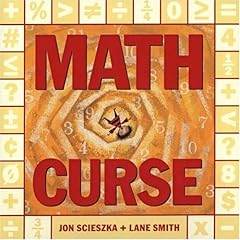
For me, first there was MATH CURSE. What a wonderfully funny math book! I used to have my third graders solve some of these very silly problems as a very motivating math lesson.
Then there was the TIME WARP TRIO series. These chapter books are hilarious! And so motivating for the reluctant readers I worked with in my private practice!
And then there was TRUCKTOWN. Oh how my three-year-old loves TRUCKTOWN! He loves all the characters, was thrilled when a book in this series came in our Cheerios box and chose to give his cousin two books from the series as his Chanukah present.
On top of all that, I found some books that I loved personally. Knowing my love for children's literature and writing, our local librarian recommended I read Scieszka's memoir, KNUCKLEHEAD: TALL TALES AND ALMOST TRUE STORIES OF GROWING UP SCIESZKA. Such fun! Read it if you can!
And the other day I found Scieszka's awesome introduction to the world of modern art, SEEN ART?. My kids are still way too young for it, but I couldn't resist getting a copy for the future (and for me to enjoy write now!).
Sorry if I've rambled into lots of mini book blurbs here, but I haven't covered half of Jon Scieszka's books. And his influence has gone far beyond the books he has written. It has extended into his efforts to motivate boys to read with his wonderful website, "Guys Read" and, of course, all his amazing efforts to connect kids and books during his year as ambassador.
Wow! Talk about inspiring! Talk about making a difference as a children's writer!
Thank you, Jon Scieszka!
P.S. Check out links to a lot of other great Scieszka thank yous here at A YEAR OF READING, the awesome bloggers who came up with this idea.
Sunday, December 13, 2009
Ally's the Next Stephenie. But Who Will Be the Next Ally?

Did you read the news in Publishers Weekly about Ally Condie, the YA author who just inked a seven-figure advance on a three-book deal with Dutton? Wow. She’s being heralded as the next Stephenie Meyer. Well, that’s what her agent, Jodi Reamer at Writers House, said anyway. According to Reamer, reading Condie’s first book in the deal, Matched, reminded her of the first time she read Meyer’s Twilight. Double wow.
But wait, that’s not all Condie has in common with Meyer. Did anyone else notice? Their backstories are surprisingly similar. To wit:
1. They both attended Brigham Young University in Utah.
2. They both have three sons.
3. They both wrote their big-ticket books as stay-at-home moms.
4. They’re both Mormons.
5. They both have Reamer as their agent.
If you're a regular reader of this blog, you may have noticed that my fellow Paper Waiters have been dropping like flies lately; landing agents, selling books, and winning writing contests. And then there's me, still in the hunt for my first agent/book deal. So I'm sure you can understand why I’m willing to try anything at this point, including selling my soul to He Who Shall Not Be Named.
And now Condie and Meyer’s mega-deals have given me a stupendous new idea: I’m going to stop revising my manuscript ad nauseum and revise my personal backstory instead. It's radical, I know, but, it can't hurt. Here’s my plan:
1. Move my family out west and get a master’s at BYU. There’s great skiing in Utah, anyway, so that’s fine by me.
2. Have a third son. I already have two, so I’m already two-thirds of the way there. My older son even happens to be named Gabe, just like Meyer’s oldest son. Is it a sign?
3. Quit my job as a college writing instructor/freelance writer to become a stay-at-home mom. If we’re moving out west, I have to quit work anyway, so again, I'm halfway there.
4. Change my religion. I suppose this means that glass of wine with dinner has got to go. Grr.
5. Land Jodi Reamer as my agent.
6. Update my author's photo (shown). I suppose it couldn't hurt to look a little less simian, more simmering.
Wait. Is that the sound of cyber laughter I hear? Is that an agent, shaking his or her virtual head, saying, "Don’t be redonkulous, you nit, you can’t sell a manuscript based solely on a good backstory. You have to write a stellar manuscript too. I mean, duh."
Fine. Call me desperate. Call me whatever you like. Just call me. And don’t forget to use my new number. In Provo, Utah.
Monday, June 22, 2009
Mission Submission
Pearls Before Swine By Stephan Pastis
Over the past few months, I rewrote, revised, puttered with and polished my middle grade manuscript. My core query is tightly written and ready for agent-specific info. I researched a targeted agent list and I am putting finishing touches to each query. My synopsis is a 500-word wonder. Will I let the worst possible time of the year during the worst possible economy stop me from hitting send?
Heck no. For me, it's the right time.
If I wasn't ready before, I had an aha moment at our last critique group meeting. We discussed how editors and agents must view "prepublished" writers. How they must see two-thirds of conference attendees as never-to-be-published, with one-third holding publishing possibilities. And how the same work of fiction is viewed oh-so-differently once it's fully justified and between the covers, rather than printed flush-left on 8-1/2" x 11" copy stock.
Enough of this, I thought. Hit send, and send, and send again, until I find a match.
Agents do sign first-time writers and editors do acquire that work. They do get excited by manuscripts they find in the slush. (Or as Edward Necarsulmer IV at MacIntosh & Otis calls it -- the Discovery Pile. I love that.)
So, I'm spending my summer vacation on the agent prowl. Anybody care to join me? And has anyone out there been discovered in the slush? Care to share your story?
Tuesday, June 9, 2009
8 Highlights from the NJ-SCBWI Conference
Eileen and I are back from the 2009 NJ-SCBWI Conference, held Friday and Saturday, June 5th and 6th, in Princeton. Apparently, the word is out about this terrific conference—-it’s getting bigger by the year. Kathy Temean, the R.A. who organizes the conference, announced there were around 240 attendees this year, up 30 or so from last year. Many of them crossed state lines to attend too. With this year’s faculty of over 20 top agents, editors, and art directors, even famous authors like Richard Peck (pictured), who can blame them?
Here are just a few of Eileen’s and my conference highlights.
1. The conference was extremely well-organized: Participants received personal folders containing their daily schedules for pitch sessions, one-on-one critiques, and lunch table assignments as well as detailed information on events and panels. Volunteers, who were identified by name tags, gave directions and monitored pitch sessions. All were courteous and cheerful and guided the buzz of conference excitement. (Eileen)
2. A house that bucks a frustrating submission trend got a round of applause: Saturday morning kicked off with a faculty panel consisting of agents, editors, and art directors, each of whom gave a short pitch about their houses or agencies, including what types of manuscripts they're looking for, how to query them, and their response policies. As per the trend, most editors and agents said they only respond to queries if they're interested. So when one panelist stood up and announced that her house responds to all queries, whether or not they're interested, attendees applauded. (J.L.)
3. Pitch sessions were longer this year: In prior years, an attendee had one or two minutes to give his or her pitch to not one but three editors in quick succession. This year, pitch sessions were five minutes long with only one editor. The new setup provided breathing space and afforded time for a little dialog. Thanks to roving monitors, my pitch session was controlled and the experience went off well. (Eileen)
4. Richard Peck’s master class: Not only is Richard Peck a wonderful writer, he’s an electric speaker who gave so many great writing tips, I don’t know where to start. Among them: “Let the change of seasons help shape your story.” “When I get a page exactly the way I want it, I take out 20 words.” “Take your first chapter and throw it away.” (Because the story really begins with the second chapter. The first chapter is usually just warm-up.) “Always write your dialog standing up, it improves the pace.” (J.L.)
5. Kathy Temean’s marketing workshop: She gave the latest and greatest tips on creating web sites, blogging, and twittering. Kathy’s bottom line: Keep your name out there! (Eileen)
6. Steve Meltzer’s workshop on novel rewrites: Lest you think your manuscript is “done” once you land the sale, Dutton’s associate publisher/executive editor showed us some revision letters he sent his writers, which ranged from a few paragraphs to 15 pages long. Said Meltzer: “It’s not about writing the first draft, it’s about whether you can rewrite.” (J.L.)
7. Carolyn Yoder's historical writing workshop: She gave helpful suggestions on how to write historical fiction and nonfiction for contemporary children and present the past to them in an exciting way. She also talked about doing the necessary research and reference record-keeping that good history storytelling demands. (Eileen)
8. Miscellaneous faculty comments: Margery Cuyler, publisher, Marshall Cavendish, said a whopping 10 percent of her list is published from the slush pile and that her house is interested in launching new talent. And agent Scott Treimel, when asked what he’s seeing a lot of manuscript-wise, said that lots of paranormal stories, zombies and werewolves were hitting his desk. “And stay away from pirates,” he added. (J.L.)
In all, it was a first-rate conference, with far too many highlights to fit in one post.
So tell us, what are your highlights from this or prior years’ conferences?