Showing posts with label Reading. Show all posts

Wednesday, September 11, 2013

List-Mania for Writers


Who doesn't love a good list? Certainly, Buzzfeed readers do. On any given day of the week, Buzzfeed offers lists of advice from Wizard Chic: 10 Ways to Look Like Less of a Muggle to the 25 Most Awkward Cat Sleeping Positions


This week, Buzzfeed was one of several websites to focus on lists for writers. I have to admit, I got sucked in - I clicked on each one. So, for this week's reading pleasure, I give you my favorite lists of the week:

Read more!

Monday, September 9, 2013

To Write a Classic

Recently my son and I have been rereading the "My Father's Dragon" trilogy by Ruth Stiles Gannett. We read all three books several years ago and he loved them. As I was organizing my books in our new house, he spotted this old favorite and asked to read it again. I happily obliged.

Read more!

Monday, May 13, 2013

And the Moral of the Story Is . . .

 Children's books with a heavy-handed moral? Preachy? Teachy? Very disparaged. A few books can get away with an overt moral - Sendak's Pierre is an example. "The moral of  Pierre is: CARE." Klassen's recent Caldecott winner, This is Not My Hat, is a more subtle example - the morals are mostly in the illustrations.
Obviously, what counts is how the moral is presented. Recently, I had a good chuckle . . .

Read more!

Friday, March 8, 2013

The Excitement of Reading!

As a children's writer, I have seen and appreciated children's books from many angles. Of course, I enjoy trying to write them. And of course I enjoy reading them. As a former elementary school teacher, I also love teaching children to read them. And now, as a mom, I am enjoying a new thrill...

Read more!

Wednesday, June 20, 2012

Happy Summer (Reading?!)

Way back when, in my small, private elementary school we did not have a summer reading list. There were no projects to complete. No packets of worksheets so our minds wouldn't turn to mush. The last day we cleaned our desks, received our report cards and didn't have to think about school until after Labor Day.

Now as a parent I greet the summer with a mix of relief (Yay! We can sleep in!) and worry (Okay, now what?) and the statistics of "summer learning loss" that are tossed around as early as a month before school gets out. I particularly enjoy the commercial for a learning center that shows words literally pouring out of a child's ear as he climbs out of the pool. The parent in me gets completely freaked with this information but there's this other part of me that's like...

Oh. Please. Come. On.

Whatever happened to summer just being summer? Family vacation? Time to goof off? Time to swim, make a sand castle, hunt for treasure, sleep in a tent, capture lightning bugs, run just because it feels good or eat ice pops that turn your tongue purple?

Not that I'm against summer reading - I don't like being the ENFORCER.  And while I never had a summer reading list, I usually read during the summer. Mind you, I wasn't reading Newbery winners - more like Forever by Judy Blume or the Flowers in the Attic series by V.C. Andrews. Books that I enjoyed - does it matter if I wasn't analyzing them? Answering essay questions? Thinking about deeper themes and meaning? I read, for the sake of - gasp - reading and I'd really like to raise children who read because they love it as well.

I do think summer reading is important, but so is goofing off. Make anything a requirement and it suddenly becomes a drag. A sure fire way to make any reluctant or rebellious would be reader push away from the table.


So Paper Waiters, what do you think? Is it more important to read from a classic reading list and work on a project than to read for enjoyment? Or can the two co-exist peacefully, especially in the summer?

Read more!

Monday, April 2, 2012

Tics That Make Characters Tick


Plot driven vs. character driven-- I love them both. But even books with the most crazy, imaginative plots (HUNGER GAMES, anyone?) better give me characters that make me care. Characters I want to spend time with. Characters I HAVE to root for. Characters that break my heart.

When I read HUNGER GAMES, I was ready to jump in and watch Katniss's back. And I was Team Peeta all the way. But in John Green's latest novel, THE FAULT IN OUR STARS, Hazel and Augustus did more than break my heart. They shattered it.

Green's writing is so much more than witty dialogue and gritty truths. He finds ways to show fierceness and bravery in simple, unexpected choices.

Augustus doesn't smoke cigarettes. He dangles them. His biggest character tic is one of choice. That unlit cigarette dangling from the corner of his mouth screams in frustration and pain, boasts of triumphs great and small, and shouts out laughter and fear.

All by choice. Augustus' choice.

In THE FAULT IN OUR STARS, lots of stuff happens that the characters can't control. And that broke my heart. But the choices they made -- well, that's what shattered it.

Read more!

Monday, September 12, 2011

Robert McCloskey


Just finished reading ROBERT McCLOSKEY: A PRIVATE LIFE IN WORDS AND PICTURES, by his younger daughter Jane. It’s an engaging read about the family, their pleasures, troubles and travels. The illustrations are not only from his books, but also his watercolors and paintings of family members and scenes of the various places they lived. Jane and her older sister, Sally (of Blueberries for Sal), spent childhood time on their Maine island, in New York, Mexico and at a private school in Switzerland.

I do wish Jane had written more about her father’s writing process – for example, how long did he work on some of the books? However, she points out he was a very “private and shy man,” and much of her “understanding” came from “detective work, watching him and thinking about him and what he said and didn’t say.”

Miscellaneous facts from the book:

1. The children called him Bob. He did not like to be called Dad.
2. McCloskey suffered with depression, had a nervous breakdown and spent time in a sanitarium.
3. There was a real Burt Dow and his tombstone reads: Burt Dow, Deep Water Man.
4. McCloskey worked a long time on puppets for a TV show, but they were never used.
5. There was a Robert J. McCloskey (State Department – Intelligence) who occasionally received fan mail for the author. The book has photocopies of a humorous exchange about this.
6. And finally: when people approached him saying they had a great idea for a children’s book they wanted to write, his reply was, “Don’t talk about it. Do it.”

Great advice.

Read more!

Friday, May 20, 2011

Cotton Candy Reads


Right now on your night stand is a book (or e-book in your e-reader of choice) that you might not admit to anyone you’re reading. Or maybe it’s a book in your beach tote. Or a book tucked away in your purse for those random moments like waiting in line at the DMV, or your lunch hour, or the doctor’s office. It’s a book you’re reading for sheer entertainment. What I like to call my “Cotton Candy” reads.

Don’t get me wrong, my reading life doesn’t usually revolve around Cotton Candy reads. My favorite book happens to be The Book Thief by Marcus Zusak and I can talk until I’m blue in the face about the intricate plot, memorable characters, and the way I had to stay up until 3:00AM to finish it…sobbing, btw. But The Book Thief wasn’t an easy read. A great read, a thought-provoking read but not one I’d read in a bubble bath and yes, I tried. Something about Death and lavender scented bubbles didn’t really mix.

No, Cotton Candy reads are fun. Fluffy. Sugary. Not really good for you but fine in small doses. And you might even feel like you need to wash your hands after reading one. The Cotton Candy read that inspired this blog post is…don’t judge…pretty please…A Shore Thing by Nicole “Snooki” Pilozzi.

Yes, that Snooki.

I said don’t judge.

I’ll admit, even I JUDGED. I’m not a fan of Jersey Shore. Frankly, I’ve seen all of about five minutes of the show, and it sort of scared me. But the truth is I’m a Jersey girl and happen to LOVE the actual Jersey shore. I’ve stayed in a share house at Seaside before I knew better. I’ve ridden the Jet Star and imagined being throttled right out into the Atlantic on that first turn. I’ve had cheese steaks and fresh pressed lemonade from The Midway Steak House. Bruce. Bon Jovi. Need I say more?

And maybe that’s why I was so curious about it. Yea, yea, THAT’S IT. My novel out on submission also happens to be set in the Jersey shore, so I told myself reading it would be, um, research to suss out the competition. I never expected to actually enjoy it.

Odd thing is - I did.

As writers we need to read for many reasons. To study plot construction. To understand dialogue cadence. To see what works and what doesn’t. Reading helps us with our own writing in ways we’re probably not even completely aware. Sometimes the voices in my head are so loud when I read that it’s distracting. “Oh, here’s the inciting moment, there’s the first obstacle, here comes the point where everything goes really wrong and then only gets worse” You know what I mean because it happens to you too. (please say it does!)

Some of that even happened while I read A Shore Thing but not a whole lot. What I did find as I read it was I wasn’t really thinking about it at all. I was reading. Laughing. Being entertained. Is that really so awful? Nope. I don’t think so.*

Whenever anyone asks me to describe the book I say it was like Jackie Collins takes on the Jersey shore. Pure. Unadulterated. FUN. I completely got caught up in Gia Spumante’s search for the gorilla juice head of her dreams. I even had to Google some of the vocab like ‘gorilla juice head’ and ‘grenade’ and ‘smush’.

So wait, does that mean I learned something?

C’mon, fess up – what’s YOUR cotton candy read?


*In my defense, on the same weekend I read said book, I also saw the film “Barney’s Version” so I think the two sort of balanced my brain cells out.

Read more!

Wednesday, March 2, 2011

Happy Birthday, Dr. Seuss!


Everyone has their favorite Dr. Seuss book or Dr. Seuss line. Here are some of my favorite quotes. Please share some of your favorites!

“You have brains in your head. You have feet in your shoes. You can steer yourself any direction you choose.”

“If you never did you should. These things are fun and fun is good.”

“Sometimes the questions are complicated and the answers are simple.”

“I know up on the top you are seeing great sights, but down at the bottom we, too, should have rights.”

"Today you are You, that is truer than true. There is no one alive who is Youer than You."

"Unless someone like you cares a whole awful lot, Nothing is going to get better. It's not."

"You're off to Great Places! Today is your day! Your mountain is waiting, So... get on your way!"

'The more that you read, the more things you will know. The more that you learn, the more places you'll go.'

"Think left and think right and think low and think high. Oh, the thinks you can think up if only you try !"

"I like nonsense, it wakes up the brain cells."

"Be who you are, say what you feel, because those who mind don’t matter and those who matter don’t mind"

"A person’s a person, no matter how small."

“I’m afraid sometimes you’ll play lonely games too, games you can’t win because you’ll play against you.”

“Today was good. Today was fun. Tomorrow is another one.”

Read more!

Sunday, February 13, 2011

Kiss Me


Happy Valentine’s Day!

I hope this post finds you sitting in front of a cozy fire, eating bonbons from your secret or not-so-secret admirer, and reading a wonderful love story in a children’s book—to yourself or your children.

Which makes me wonder…

What are some of your favorite PB, MG, and YA love stories, from classics to new releases?

For me, in the picture book category, The Kissing Hand by Audrey Penn jumps to mind. Just thinking about the portable palm-smooch that mother raccoon gives her raccoon kid, to comfort him while he’s at school, makes me start to dissolve all over again.

For middle grade, Tuck Everlasting by Natalie Babbitt also reduced me to a soppy mess. When (spoiler alert!) Tuck discovered what had finally become of Winnie, I broke down. I know I was supposed to feel like she’d made the right decision, but I cried anyway. Maybe you did, too.

In the young adult category, it’s probably no surprise that the Twilight series by Stephenie Meyer tops my list. A love triangle like that would top any warm-blooded human’s list. Bella and Edward and Jacob, oh my!

Now, you tell me: Which books make your list for best kid lit love stories and romances?

Read more!

Sunday, October 17, 2010

Listen Up, Everyone. It's Read Aloud Time!


"So, what to choose when a family truly of 'all ages' wants to read a book together? What can satisfy a six-year-old, a ten-year-old, and their eccentric middle-aged uncle and formidable grandma all at once?"

Horn Book editor Roger Sutton asks this question to introduce "What Makes a Good Book for All Ages?" in the September/October issue.

His question is answered with seventeen recommendations from ten H.B. reviewers.

The variety of the suggested titles surprised me: from classics like Kipling's "Just So Stories," to "Dying to Meet You: 43 Cemetery Road," by Kate and M. Sarah Klise, published in 2009; from Hoban's "The Mouse and His Child," to "Burt Dow, Deep-Water Man," by McCloskey; from Peterson and Audubon field guides for birds and trees, to Steig's "Sylvester and the Magic Pebble."

One reviewer concentrated on books about families, mentioning (among others) : "The Watsons Go to Birmingham-1963," by Curtis, "A Long Way From Chicago," by Peck, and "Harris and Me," by Paulsen.

I wonder how many extended families read aloud together these days. I suspect it's a lucky minority.

Has anyone had this experience?

What title(s) did you read?

Read more!

Wednesday, September 8, 2010

How I Read

Ever since I got serious about my writing, I have found myself reading differently. At first, I made a conscious effort to read like a writer, but now I can't help it. I just do.

I recently realized though that there are two main ways that I do this.

The first way is really purposeful "writer reading". This type of reading happens when I'm faced with a challenge and I don't know how to solve it.

My favorite example of this type of reading was when I was first starting to write rhyming poetry and all my poetry fell into an ABAB rhyming pattern. I knew my poetry needed more variety, but I didn't know how to do anything other than what I was doing.

So I scoured the pages of Cricket and Spider and Highlights for wonderful poems. Then I figured out how they varied their rhyme, and I imitated their rhyming patterns.

After a few of these, I must have internalized how to vary my rhyme. After that intense reading and purposeful writing, my rhyming poetry no longer felt so similar. Hurray!

But not all my reading like a writer is quite so focused. A lot of times I'm just reading. Often something that has seemingly nothing to do with the kind of writing I tend to do.

For example, right now I'm immersed in "The Guernsey Literary and Potato Peel Pie Society". It is pretty far from the wacky picture books and sweet easy readers I tend to write. But I still read it like a writer.

As I read, I can't help thinking that I want to write a book in letters someday. That I love a book that plants clues so slowly in the beginning that I have to really work to figure out what's happening. I wonder how much I could challenge my much younger readers like this before they would give up reading in frustration. (After all, I went through several false starts before I could get past page 5.)

Maybe these ideas are just that, ideas. Maybe they'll never become part of my writing. But maybe they will.

After all, for years, I read all sorts of poetry-- rhyming and non-rhyming. I loved how subtle some of it felt and wished I could write that way. But I didn't know how. Then one day, I started a poetry collection that had a very different feel. I'll never know exactly where my new voice came from, but I was very excited to find it in me. Somehow, it must have come from all that wonderful "purposeless" reading.

So, I read like a writer no matter how I read. Please share, how do you read like a writer?

Read more!

Monday, June 21, 2010

Summer Reading

The word summer conjures up lots of images. For me it involves sand, surf and long lazy days ending with pink sky sunsets (even though my new home is quite landlocked!). For my kids who just finished school, summer equals freedom. You know, the whole, no more pencils, no more books, no more teacher's dirty looks feeling. Until I hit them with the two words that can melt their Popsicles faster than a ninety degree day...cue dramatic dream dashing music...summer reading.

Okay, so I didn't wave their required reading lists in front of their faces the moment they stepped off the bus for the last time this school year, but it doesn't matter when I bring it up. Summer reading elicits the sort of groans that also come with such parental classics as eat your veggies and clean your room.
A total buzzkill.

This frustrates me because as a mother, writer and avid reader myself,I want them to WANT to read. Put the word required in front of anything though, and resistance is sure to follow. When I was in school, I never had a required summer reading list. I read anyway, and still do. Summer reading for me is as second nature as putting on sunscreen before hitting the beach. Of course I read year round, but during the summer I need fun reads. Reads I can put down,take a dip in the pool and come back out ready to pick up where I left off.

Here's my current summer reading list (sans Kindle, I read old school and recently carried this particular bag o' books up for my trip to NJ, which is also good for a quick biceps/triceps workout...who knew?) I'm in the middle of a few of them and can't wait to crack the rest.

Criss Cross by Lynne Rae Perkins
From Dead to Worse by Charlaine Harris
the short second life of bree tanner by Stephenie Meyer
Prada and Prejudice by Mandy Hubbard
Fragile Eternity by Melissa Marr
Women, Food and God by Geneen Roth

So, let's share - what's on your summer reading list?

Read more!

Friday, September 25, 2009

To Read or Not To Read Part 5: Morbid Inspiration


My husband and I have been spending a lot of time in cemeteries lately. Not because anyone we know has died (thank goodness), but as tourists. That might sound ghoulish, but it was not our intention.

In the last month we've been to Arlington National Cemetery, Christ Church Burial Grounds in Philadelphia, and Lafayette Cemetery, pictured above, in New Orleans.

Comparing the three cemeteries is like comparing apples and oranges. Arlington National Cemetery is 200 acres of pristine and uniform graves. It provides a snapshot of our national history. Did you know that the property once belonged to Robert E. Lee? I particularly enjoyed the section where the nurses are buried. Hundreds of women who served during war time. Their names alone are worth the trip - Phoebe, Constance, Betty, Gertrude. In comparison, the Christ Church Burial Ground is 2 acres with some 4,000 graves, including five signers of the Declaration of Independence and victims of the 1793 Yellow Fever outbreak (I've added Laurie Halse Anderson's FEVER to my TBR list). The Lafayette Cemetery in New Orleans is unlike any other cemetery (well, any cemetery above sea level). In New Orleans, tombs are used. So walking through the cemetery is like walking through a town - row upon row of tombs dating back to 1833.

So, what the heck does our morbid fixation with cemeteries have to do with writing?

I've been reading a lot of ghost stories lately. As part of my work for VCFA, I have to read roughly ten books every four weeks. For the last packet, I read all ghost stories. For the packet due in October, I'm reading stories that have Death as a character. Why? My current WIP is a ghost story and I've never written a paranormal story before. So I need to learn how others have done it.

Some of the books I've read in the last month are:
GHOSTS I HAVE BEEN by Richard Peck
GHOSTS OF KERFOL by Deborah Noyes
THE KILLER'S COUSIN by Nancy Werlin
RUINED by Paula Morris (which prominently features the Lafayette Cemetery).
SKELLIG by David Almond (not really a ghost story but a GREAT book)
THE GRAVEYARD BOOK by Neil Gaiman

What I've learned from all this reading is that there are as many types of ghosts floating around in writers' imaginations as there are writers, and comparing them is like comparing cemeteries - apples to oranges. Some ghosts are menacing and scary and kept me up at night (THE GHOSTS OF KERFOL), some are loving and kind (THE GRAVEYARD BOOK), some are helpful (THE KILLER'S COUSIN). What it means is that I can have my ghost be any kind of ghost I want her to be. The only rules that exist for ghost stories are the ones created by the writer for their specific world. The ghosts must be true to that created world.

If you've been reading this blog for a while, you'll know that I've had a change of heart when it comes to reading YA. I never used to read it. Now, it's ALL I read. I read with a highlighter in one hand and stack of post-it-tabs in the other. When I'm done with a book it's marked all up and has all kinds of papers sticking out of it. I learn something from every book I read, even the ones I don't particularly like. The really good ones inspire me. And, the cemeteries have inspired me as well - through the ambiance of their hallowed ground and the voices of all those souls. After visiting all these places it is easy to believe in ghosts.

So I wonder, if I find inspiration from graveyards and ghost stories, where do other writers, whether you're writing contemporary, historical, sci-fi, whatever, get their inspiration? What are you reading and what have you learned?

Read more!

Tuesday, August 4, 2009

My Autographed Copy of Thirteen Reasons Why


Jay Asher’s Thirteen Reasons Why has been on the New York Times Best Seller List for the past ten months. This is a remarkable achievement on its own, but even more remarkable because the book was published almost two years ago. I devoured it in one sitting when it first came out. Now I have an autographed copy to reread at my leisure.

I went to see Jay speak at Borders in Bridgewater. I brought along a trusted connoisseur of YA literature—my fifteen-year-old son. He enjoyed the presentation as much as I did.

Jay’s journey to the best-seller list was full of bumps in the road, and he generously shared his story of twelve years of writing without a publishing offer. He also devoted time to the construction of Thirteen Reasons Why—from concept, through the writing process, his beta readers, his rejections, and finally, his multiple offers.

While all writers love good rejection stories, my big take-away was on concept and process. Jay explained his concept for Thirteen Reasons Why—a cassette tape tour—was born after taking a taped tour of the Luxor in Las Vegas a decade before he began to write the book. Also during that period, a young relative attempted suicide. But it was years before he merged concept with storyline and began to write.

This was an a-ha moment for me. I’ve had one particular concept rattling around my head for a few years that I absolutely love, but haven’t begun to write. Listening to Jay made it crystal clear why—I haven’t found its emotional arc.

He next talked about process—his dueling narrators and how he had to write one story first and then the other. He said as he read over Hannah’s story, he found himself naturally reacting to what she said, and a lot of those reactions became Clay’s reactions. This for me was an a-ha validation moment. I did the same thing in my final revision for my middle grade novel. I looked for places where I had an emotional reaction and made sure my MC noted his.

Jay’s critique process was very different from mine. Jay went to a series of beta readers for specific revision issues: plot, pacing, grammar, and finally to his mom, the ultimate feel-good reader.

My trusty critique group throws it all at me at once—full barrels. But everyone in our group does have different critique strengths and I do look to each for their area of expertise, be it plot, character, setting, pacing, grammar or tone. I will admit, however, I also have a feel-good reader—my fifteen-year-old son, who not only loves my writing, but also gives me some of the best suggestions for keeping it real.

I look forward to another read of Thirteen Reasons Why. I know as I read I’ll be even more amazed that it took twelve years for Jay Asher to be published. And I’ll be grateful to be part of a community of writers who so generously share their stories to help others reach their publishing goals.


Read more!

Thursday, July 16, 2009

Summer School

This summer I've had three grandchildren ages ten to sixteen in the house, along with their summer reading lists. I was determined to read all those books with them, and did. The experience will shape my writing from now on.

With the sixteen-year-old I read All Quiet on the Western Front and The Good Thief by Hannah Tinti. He's a challenged reader and struggled with the often arcane figurative language. When I got him to slow down and explained to him (image by image) how the authors were using the imagery he understood. His face lit up and he said, "Oh, I get it."

I'll now work harder to write in a way that will capture the attention of a struggling reader.

The thirteen-year-old put aside Twilight and breezed through To Kill a Mockingbird, A Separate Peace and The House on Mango Street. In the meantime she picked up The Prince, read most of it and said, "This has some good stuff in it." Her school requires her to keep a detailed journal as she reads each book, making note of passages that she feels are important to the story and recording her interpretation.

I now understand the necessity to keep the reader engaged, moving the action along but pausing to emphasize the theme at appropriate points in the novel. More importantly, I will no longer be afraid to use words that might challenge a young reader. How else will they increase their vocabulary?

The ten-year-old had an appetite for just about anything, including Twilight. Encouraging her to read less sophisticated (and scary) books that she could enjoy was the challenge here. If You're Reading This, It's Too Late was her favorite, but she found the 1944 Melendy series equally interesting.

Mystery is important to this age group; how does a writer keep a secret until the end, all the while planting clues that won't give it away?

Thanks to this summer vacation, I'll return to my writing with renewed interest and the determination to create, with a novel, the opportunity for a young mind to travel to a different time and place.

Read more!

Tuesday, July 7, 2009

Perfect Endings


Quick question here: How many times have you polished the opening page of your latest manuscript?

If you're like me, and many other writers, the answer is probably, "Too many times to count."

As writers, we are always told how important those opening pages are to catching a reader's (and an editor's!) attention. Whether we're at a "First Pages" session at a local writer's conference or reading Noah Lukeman's excellent book, "The First Five Pages," we get the idea of how critical that perfect start is to our current wip.

But what about that perfect ending?

In my opinion, not all published manuscripts live up to this even greater challenge. But when I read one that does, that sense of perfect completeness is incredibly satisfying.

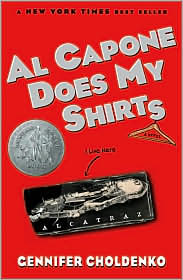
Recently, I finally got around to reading Gennifer Choldenko's excellent middle grade novel, "Al Capone Does My Shirts". I could easily write essay after essay about the many fine examples of the writers' craft Choldenko provided me with in this wonderful story. But, what stood out for me most was the absolute perfection of her ending.

I'm going to quote the last 3 perfect words below:

Done, it says.

Doesn't sound like much, does it? But for me, it was perfect. (And, if you read the book, I'm guessing you might have thought so too.)

I'm curious, what endings have you loved?

P.S. As an extra special ending for today's post, I just wanted to make sure everyone knows about Cynthea Liu's exciting auction. There are incredible prizes up for bid (think editor and author critiques!) and all the money earned through the auction goes to buy book boxes for kids at a Title 1 Elementary School. The auction deadline has been extended until July 8th, so take advantage of the extension to get your last bid in!

Read more!

Monday, May 25, 2009

To Read or Not to Read - Part 4


This is my new bookcase. I love it! (I've been looking for an antique glass-fronted bookcase that didn't cost a fortune for years. But that's another post for another blog). I bought it because I've accumulated so many books that my old bookcase was filled and piles of books were amassing on the floor around the bookcase. Now look at all the empty shelf space begging to be filled! I love to read and lately, in the last year, I've been reading lots and lots of YA (see previous posts To Read or Not to Read - Parts 1-3). But now I find myself with a problem.

It is fear. Fear of Incorporation. Fear that I am never going to have an original idea again. Fear that I am taking bits from each of the books I've read and putting them in my new story. For example, if I have my main character see the school psychologist during school hours, is that stealing from Courtney Summer's CRACKED UP TO BE? If a character enjoys anagrams, is that too much like John Green's AN ABUNDANCE OF KATHERINES? Or if the MC feels as if no one understands her, is that copying from David Klass's YOU DON'T KNOW ME? And what if I want to add viral infected zombies, is that too close to IN THE FOREST OF HANDS AND TEETH? These are a few of the YA books I've read recently and I'm now calling into doubt every plot point I've imagine for my WIP. Did I think of that on my own, or was it something I read in someone else's story?

This, for me, is the dilemma of reading in my genre. I understand that the points I've picked out are small and insignificant. They can and do happen in real life (except for maybe the viral infected zombies) and given a believable and original set-up it makes perfect sense to fit these details into a story. And, given a believable and original set-up even the zombies could fit into a story. I just don't like second guessing myself. Maybe I should write a story that "steals" one component from every book I've read? A viral infected zombie who is misunderstood and has to visit the school counselor at lunchtime, but can only communicate through anagrams. Hummmm....maybe not.

I suppose I need to remember that there are no new stories to tell, only new ways to tell them. Now I'm off to the bookstore!

Read more!

Sunday, March 8, 2009

Reading Like a Writer

When I taught elementary school, one of my students' favorite subjects was always "Writers' Workshop". (No surprise considering my own passion for writing. :o)) And, as part of Writers' Workshop, I used to give my students mini-lessons on how to "read like a writer". In these mini lessons, I would share with my students carefully collected story openings or story closings or snippets of dialogue. In these lessons, I tried to make my students aware of how these wonderful authors whose craft I was sharing with them could be their actual writing teachers. They (and I) could learn so many wonderful techniques from such careful reading of children's literature.

I continue to learn a great deal from other writers. But, now that I'm a much more serious children's writer, reading like a writer has come to have an expanded meaning for me.

Yes. I now experience another emotion when I read a perfect book.

Envy.

Okay, envy doesn't adequately describe it. (We writers must always search for the perfect word, mustn't we?) It's more like a combination of exquisite appreciation for the perfection of what the author has accomplished... combined with absolute despair of ever being able to accomplish anything anywhere close to that good in my own writing!

Books that have given me this wonderful/awful feeling include Thirteen Reasons Why by Jay Asher, Rules by Cynthia Lord, Flipped by Wendelin Van Draanen, Because of Winn-Dixie by Kate DiCamillo, The Giver by Lois Lowry, Dragon Slayers Academy by Kate McMullan and Art by Patrick McDonnell. These are books that have hooked me so totally and completely that I can't "read like a writer". Not on the first reading (or two) anyway. I am just completely swept up in a perfectly told story. And when I go back to see why the story was so perfect... I usually end up swept up totally and completely once again. These stories are that good!

And then I wish that I could create something like the book I just read. Something serious or thought provoking or hysterically funny (depending on what the last book I read was). Oh how I wish that I could!

But I can't. Because I write my own stories with their own unique voice and they're different from all my favorite authors. (Oh how I wish I could write thought provoking adventures like Margaret Peterson Haddix!)

Yet I know the reading of these wonderful books must expand me as a writer. They encourage me to expand my horizons and to shoot for perfection in my own writing. To try to create a book someday that will give some other writer that wonderful mingling of joy and despair. To create a book that will leave that type of lasting impression on my own future young readers.

So, I'm curious, how has being a writer changed your reading? And are there any "perfect" books that give you the feeling I've described?

Read more!

Wednesday, December 10, 2008

One Foot in Front of the Other

I recently read a book by the Japanese novelist Haruki Murakami. WHAT I TALK ABOUT WHEN I TALK ABOUT RUNNING is a memoir about the twin forces in his life that matter most to him - writing and running. For Murakami, running and writing share much in common, and to do either, he feels, one needs the same qualities - endurance and focus. I agree. And although Murakami is a prize-winning, internationally acclaimed novelist, and a marathon runner who logs in over 60 miles a week, and I am not an internationally acclaimed author (yet) and I log in around 15 miles a week (and that will likely never go up), I found great inspiration from his book.

I love the idea that the very things that keep me going on a run - will, endurance, mind over matter - can and should keep me going at the computer. I tend to give up on my writing a little too easily, but if I were to treat writing as I do running - not giving up even when I feel like I can't breathe, or my stomach hurts, or I'm beating myself up about how weak I am - I'd get a lot more writing done. I'd log in the number of pages a week that I aspire to, instead of quitting early, when I don't like what I'm doing.

Murakami stresses that while good writing usually doesn't happen without a certain amount of talent, it's really these other qualities that get one to the finish line. I guess Woody Allen said it all a long time ago - success is 1% talent, 99% perspiration. Or was it 99% showing up? In any case, it was refreshing to hear Murakami discuss how hard it is for him to write, and run, despite his tremendous success.

Read more!