I am feeling really sentimental right now. This is my final post for The Paper Wait.
I remember when we sat around a table trying to figure out a name for this new blog we were trying to form. And I remember when we "practice blogged" before we even shared with the world what we were doing. The world of blogging was so brand-new!
Over the years, our blog blossomed. It became a place for us to converse about what was going on in our writing lives. With our fellow critique group members and with our wonderful readers. (Thank you, Wonderful Readers!)
Over the years, our posts shared the highlights of our writing lives. These posts share our questions and our doubts and our fears. They also share our successes and our cheers for one another!
Monday, February 10, 2014
My Final Post


Saturday, February 1, 2014
Wednesday, January 29, 2014
It's the ONLY thing!
Writing for children ....... "It's the ONLY thing!"
While we take a hiatus from our blog, I focus on the reasons we choose to write for children and feel like Water Rat said so famously in the classic, WIND IN THE WILLOWS, when describing boating to Mole, "It's the ONLY thing!" For us, writing for children is the ONLY thing.
In his children's book of 1908, Kenneth Grahame creates an enchanting new world for the child reader with wonderful language ("Never in his life had he ( Mole) seen a river before...this sleek,sinuous, full bodied animal, chasing and chuckling....with a gurgle...and a laugh....Mole was bewitched, entranced, fascinated...he trotted as one trots, when very small...") . Here Grahame creates the picture of a lively running river, a new and intriguing experience for his character, and endears his character, Mole, to the small child reader who is also "very small."
In his classic, Grahame creates a new place for children, with well developed characters that children embrace for their familiarity and bond with as friends, brings a story of simple but exciting adventure and carries the reader out into the environment of the nature filled river world and woods.
When Grahame as an older man met with Ernest Shepard who was illustrating the first edition of the book with pictures, he spoke of his characters, Mole, Rat, Toad and Badger. He said, Please treat them kindly. They're my friends.
If we can create well crafted characters that are our friends and become friends of children and bring them to the readers in a unique and familiar setting so children relate to them and remember them with pleasure or use them to understand experiences of their expanding world, it will be the ONLY thing.
Friday, January 24, 2014
Endings
 |
| Wikimedia Commons: Photo by Roke. |
Read more!
Saturday, January 18, 2014
Taking a Blog Break

In 2008 when we started The Paper Wait, the social media arena was very different. Blogs were "the thing," and a critique group blog was unusual. The scene has changed. Facebook and Twitter hold sway now and we're ready for a blog break. Five years of thoughtful, informative and humorous posts remain that reflect our varying personalities.
My posts often echoed my writing life during the last five years:
Read more!
Wednesday, January 15, 2014
When the Character Fits

I'm in the home stretch of my WIP. I've worked on the flow. I've cut out repetition. My dialogue sparkles. But it still needs a little work. I need to make my minor characters as rich and full as my main character.
Read more!
Saturday, January 4, 2014
The Heart of the Matter
No, this is not a commentary on Greene's novel. But I will use the title, as the topic has interested me over the holidays.
As a writer, the art of telling a story is always on my mind. During the past month I re-read several children's novels: Robinson's The Best Christmas Pageant Ever and many of Roald Dahl's books, both short and long, among them, James and the Giant Peach and Matilda. What was the common factor in all of these "classics" for children? I think it is that the "oppositional characters," those who provoke the action, are really, really mean, gross and wicked. They are OVERDRAWN. Singly or together the "villains" present obstacles that the child protagonist must overcome, either by his wits or by magic or both.
Today's writers face an even greater challenge than did Dahl; his stories are mostly "telling," and he paints with a large, vibrant brush. In contemporary children's literature, that's no longer permissible. Today's writers are in heavy competition with the digital world that has surrounded their readers since their toddler years. "Show, don't tell" is now the writer's mantra.
But larger than life antagonists are absolutely necessary. The trick is to create them through dialogue and action, using very little description. That is the "Heart of the Matter."
Wednesday, January 1, 2014
When writing daily is like eating healthy
I don't do New Years resolutions, but as it happened I made one that pretty much coincided with the new year. I was walking around New York Monday thinking how hard it was to go back there. It's where I grew up partly, and I lived there later, but I have few friends and roots left there. I find in psychologically difficult to go in anymore. Still, I knew it was the right thing to do, and so I forced myself to go in and meet a friend for lunch. I had had the whole week off, but was still stressed from work, even dreaming about it at night.
Anyway, as I was walking down Eighth toward my friend's office, it occurred to me that if I focused on only TWO things this coming year besides parenting--that is, two things concerning me and only me--that I could keep myself sane and moderately content. The first thing was about food, the second about writing the novel. It occurred to me that if I regarded the writing like the food, I'd do well.
Tuesday, December 24, 2013
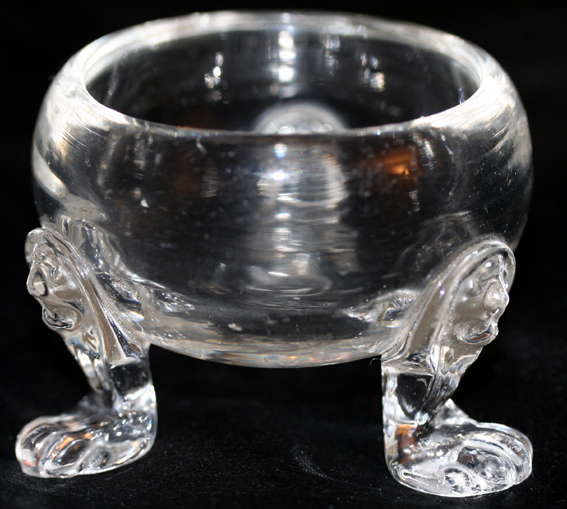
The Salt Cellar: Object Inspiration
 |
| By Photo by Nick Michael (Private collection) [Public domain], via Wikimedia Commons |
Wednesday, December 18, 2013
December Summaries: Two "Best" Books Lists
December. We look back and summarize our year on Christmas cards. Book review journals summarize a year of publishing in "best" lists.
School Library Journal has published three Best Books lists: Fiction, Non-fiction, and Picture Books. (From the fiction list, you can access the other two lists.)
These SLJ lists hover around twenty titles in each category. It's interesting to compare those lists with the shorter (more selective?) list from Horn Book.
Sunday, December 15, 2013
What's Better Than the Library? Nothing.

I love it when I'm on the other end of that deal, too. When I open a box and in it is exactly what I want at that moment.
But I'm lucky. Really lucky. I get that feeling of opening up a box and finding that exact special treat so many times every year. I get it every time I walk into my library.
Read more!
Wednesday, December 11, 2013
The 12 Days of Christmas (Bookstore Style)
Hope you enjoy this adorable 12 Days of Christmas video from the Bookish Elves! Happy Holidays!
Thursday, December 5, 2013
Writers to the Core
To follow up on Julie's post, I think writers have been adhering to the "common core" for centuries. Most writers are not just story tellers. They are teachers as well. It comes naturally to them to describe a scene, a sequence, a beginning and an end. Writers raise questions and answer them. They use history, science, anecdotes, folktales old and new, stones, ducks, rabbits and wizards to tell their stories. In every story there is something that relates to what constitutes an education for a child.
I was reminded of this today in a Wall Street Journal piece, "The Hunger Games" Is a Civic Lesson" by Robert Pondiscio, a former fifth grade teacher in New York's South Bronx. He explains that when parents decry the brutality in Suzanne Collins' novels, they overlook the excellent opportunity the author offers. Not only do the books keep "reluctant" readers turning the pages, but, Mr. Pondiscio says, "they also provide an opportunity to educate kids about the relationship between the individual and the state, personal rights and responsibilities, and the civic duties expected of citizens."
So, writers, worry not. Keep on writing, whether it is about Yetis, frogs, spoonbills, alligators or penguins, graveyards or vegetable gardens. You are all "writing to the core."
Sunday, November 24, 2013
Common Core: Basics and Opportunities
“To align instruction…so that many more students than at present can meet the requirements of college and career readiness.”
Sunday, November 17, 2013
Favorite Writing Tips
Nathan Bransford's contest to win a Kindle in honor of his new book How to Write a Novel is over, but he's published many of the "Favorite Writing Tips" he received as contest entries.
I quoted Lela, the winner, in my comment to J.A's post last Wednesday: "Write. Write poorly, but WRITE."
But there are other gems . . .
Wednesday, November 13, 2013
NaNoWriMo...Specifically

But do I still want to?
Read more!
Friday, November 8, 2013
Making Time to Write
I do a lot of my writing when I'm inspired. An idea takes hold of me and I just can't stop writing.
This is a very fun kind of writing to do. My writing tends to just flow.
But I often don't dedicate nearly as much time to writing as I would like to do. Life keeps getting in the way.
Recently I was able to dedicate one evening a week just to writing. An evening to myself! When I could focus all my time on writing. It sounded like heaven. But...
Tuesday, November 5, 2013
Falling in Love
I asked my husband at dinner, what's your favorite character in literature? After convincing him that Alfred Sloan ("My years at General Motors") was not what I was looking for, he came up with Faust. He said, "I like characters with whom I can identify."
Granted, I could understand Sloan (my husband is a linear businessman) and not so much Faust (my husband is not that consummate a businessman, selling his soul, etc., but at least he picked a character with hopes and faults; in this instance, faults too great to save his soul.
Creating a sympathetic main character or characters is the writer's biggest challenge. Somewhere between nice and nasty is a good beginning…you want your reader to like her, and yet if the heroine is too nice, your reader will figure that there is no point in reading further. Nothing of interest is going to happen. Too nasty, and the reader will also lose interest. Newspapers have more to offer.
The writer must create is a heroine who knows what she wants, but whose human weaknesses prevent her from achieving them…initially. As a reader we want to be one step ahead of the heroine. We want to see her mistakes, to say, "wait, that's not such a smart move" And we want to cheer her on when she finally makes the right choice. In the end, we want to identify completely with her, to fall in love a little with her even. And when the book ends, we want to find it hard to say goodbye.
Saturday, November 2, 2013
They Come to Me for Nonfiction Now
Monday, October 28, 2013
Added Atrractions Necessary? Part II

Received a contract last week for "Two Young Frogs: An Old Japanese Tale." (Post of 10/17) Those frogs will appear in Highlights someday. Perhaps mentioning map skills did help.
Read more!


